Birds, Seeds, and Work That Matters
Birds, Seeds, and Work That Matters
A few years ago, we had a spot in our backyard where both a shrub and a tree had failed to grow, partly due to my inexperience as a gardener. The lawn in that area was dead, now, and there was nothing to show for the disturbance besides weeds.
I decided to try to make the most of it. It seemed both better and easier to replace the dead lawn with a wildlife-friendly plant bed, something low maintenance and pleasantly wild. I added some flowers deliberately, and others from seed packets I didn’t investigate too closely, so I wound up with a chaotic mix of native-to-Indiana and exotic species.
One flower I didn’t add on purpose was evening primrose. One day, I noticed some had appeared in this “wild” plant bed, whether from a seed mix or from a bird. It can spread prolifically if left to its own devices. I still do not know if it was the native or nonnative variety, but I left it alone, hoping for more.
Last year, we did indeed have an abundance. The yellow blossoms mostly close during the day, but they remain open enough for hummingbirds to enjoy their nectar. Toward the end of their growing season, they went to seed, and I considered cutting them back so they wouldn’t keep reproducing and crowd out my other plants. But I never got around to it—and then we got more bird visitors.
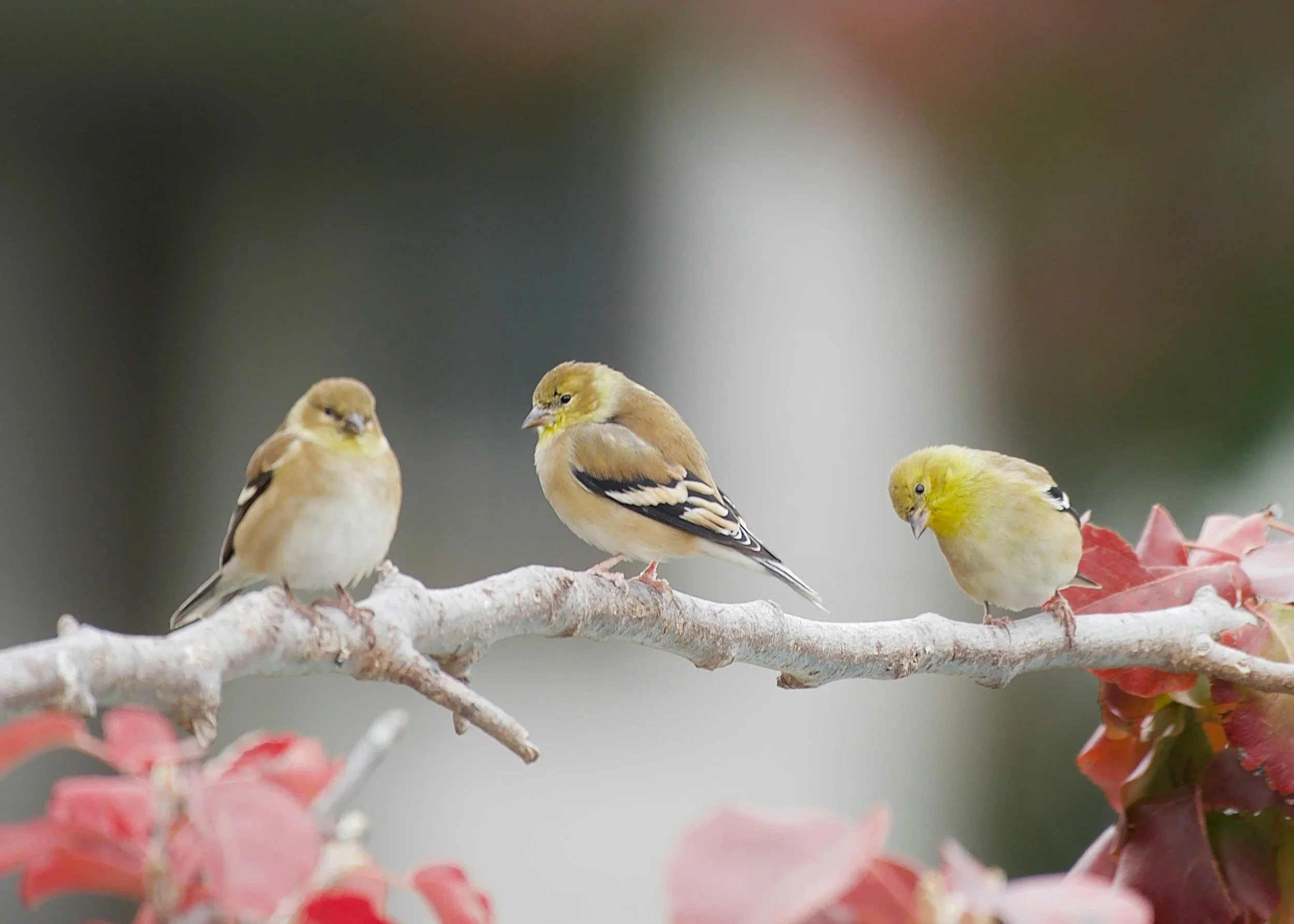
Goldfinches, in particular, like to hang out on spent flowers, eating the seeds. I’ve seen them snacking on other native seeds, and early in the autumn of 2024, I watched them hang out for long meals at the Evening Primrose Buffet.
This reminded me of something Jesus said:
“Look at the birds of the air: they neither sow nor reap nor gather into barns, and yet your heavenly Father feeds them. Are you not of more value than they?” - Jesus (Matthew 6:26, ESV)
I thought about where human work comes into this. God cares for His people, but humans seem to need to work to eat, generally. There are plenty of proverbs in the Bible about diligent work, being poor for lack of work, and the like (e.g., Proverbs 6:6-8, 12:11, 21:25).
And in this case, the birds didn’t do work to enjoy primrose seeds, but my first thought was that I did work.
It was a fleeting thought, an arrogant thought. I remembered quickly that these primrose seeds were in spite of, not because of, me.
If I’d had my way, originally, that plant bed would be a shrub or tree alone in a lawn. If it had been up to me, evening primrose would never have been in the flower bed. At the very least, they never would have gone to seed.
Not I, not at all, but God fed the birds.
He used my clueless, somewhat busy, somewhat halfhearted effort to have any kind of wildlife-friendly plants. He did not have to. I, and the birds, got to enjoy it because He decided the flowers would grow, bloom, and reproduce.
Even when my wildlife-feeding goes to plan, the very ability for me to plan and adequately execute the steps, not to mention the physical growing of a living plant, relies on God from start to end.
On the topic of evangelism and how others come to faith, the Apostle Paul wrote in a letter to the church at Corinth:
I planted, Apollos watered, but God gave the growth. So neither he who plants nor he who waters is anything, but only God who gives the growth. He who plants and he who waters are one, and each will receive his wages according to his labor. For we are God's fellow workers. You are God’s field, God’s building. - 1 Corinthians 3:6-9 (ESV)
In this case, I neither planted nor watered; God still chose to give the growth, and fed His little birds.
I struggle with my work and rest balance, like a lot of people. I have sometimes done a pendulum-swing between perfectionism and despair. With chronic health concerns that ebb and flow, I have struggled with guilt for lack of productivity, and not knowing whether to push through on sick days, risking more downtime if I get it wrong, or to rest more, risking wasted time when it’s possible I could have handled it.
I tend to end up anxious as a result of not knowing what to do. Yet immediately after that truth about the “birds of the air” in Jesus’s Sermon on the Mount, He asked:
“And which of you by being anxious can add a single hour to his span of life?” - Jesus (Matthew 6:27, ESV)
Putting the weight of the universe on my shoulders is wrong. It does not all depend on me; it is not my worry that holds even my schedule together. And flippancy is also wrong, as if nothing I do matters at all. We are given much to steward, after all.
To the Galatians, correcting a false doctrine that was causing them to stumble, Paul wrote:
For in Christ Jesus neither circumcision nor uncircumcision counts for anything, but only faith working through love. - Galatians 5:6 (ESV, emphasis added)
And to the church at Ephesus, he wrote:
For we are his workmanship, created in Christ Jesus for good works, which God prepared beforehand, that we should walk in them. - Ephesians 2:10 (ESV)
By God’s grace, we get to do work that matters. And what matters is “faith working through love.”
If I can participate in feeding God’s birds—or His sheep, His people—by faith and love, what a privilege that is. I don’t—cannot—do it on my own, and it’s not mine to do nothing at all, either. I walk with Him in faith and love, by His grace.
Leaning on His grace is vital, because we will fall down. God’s grace allows us to try freely without fear of failing. When we fail, He is enough. When we succeed, we know it was thanks to Him. He gets to define “success” for us. He is strong enough, present enough, good enough, able enough to complete our weakest places, and He gets the glory regardless.
To follow and to work with God within His design is no imbalance.
I believe that Jesus, during the brief years He was physically on the earth, was fully present to what needed to be done in the present moment. He was intentional, yet open to divine interruptions (Luke 8:41-48). He walked wisely, and still slept through a storm on a boat when others thought He should pay more attention (Mark 4:35-41). He was faithful and active, but still sought rest and time alone with the Father (Luke 5:15-16). And He did this in peace and joy, not in people-pleasing or fear or pride.
Let us always imitate Him, growing more like Him always.
When I feel I am leaning toward perfectionism or despair, or pride, anxiety, or neglect, I must learn to turn to gaze at Him alone, to confess, to repent, to request again His grace, to lean freely on His grace, to live fully in His love.
The fruits of the Holy Spirit are fruits, after all, not manufactured by sheer strength of human will, and if my peace is missing, I can find it again solely by looking to Him.
Something I find interesting, and do not fully understand: my “failure” to prevent the primrose from going to seed didn’t result in a surplus this year. I’m not sure if the birds ate all the seeds, but my fear of the plants crowding others out did not come to pass. In fact, I barely saw any primrose this year, and I missed watching the goldfinches.

About the Author: Rae Botsford End is a writer, editor, and artist who lives in Indiana with her husband, Ed.
She has had an article published in Geeks Under Grace, and her short story “Ba’byl” is available on Kindle.
To read more from Rae, visit her website at raebotsfordend.com and subscribe to her Substack, “Letters from Rae Botsford End.”
Want to read more articles like this one? Subscribe today for free, and you’ll get blog posts and updates sent straight to your inbox, so you’ll never miss a thing!